Items
-
 Gans (née Oppenheimer), Bella, residing in Beer Tuvia, Israel, reparations file.Bella Gans, residing in Beer Tuvia sought compensation for harm to profession suffered by her husband, Moritz Gans, as he was forced to give up his shop in Nuremberg, and for harm to life suffered by their son Erich Gans, who was murdered in the Dachau concentration camp on July 1, 1934. Bella and Moritz Gans emigrated from Nuremberg, Germany, to Mandate Palestine in 1936. Compensation is also sought for family's household sold before emigration and transport expenses incl. Haavara transfer. Following Bella's death on March 4, 1950, her daughter Rita Kohnstamm, residing in Beer Tuvia, Israel, continued the claims and also sought compensation for harm to profession and to life suffered by her sister Rosa Klein who went missing after being deported to Lublin in March 1942 along with her daughter Ruth Klein. After Rita Kohnstamm's death on December 12, 1966, her widower Jakob Kohnstamm continued the claims. Jakob also had separate claims as heir of his father Moritz Kohnstamm and Otto, Nathan, Klara and Tekla Goetz. The heirs received a total compensation of DM 8,500 for harm to profession suffered by Moritz Gans, and a further DM 700 for harm to property and assets. Later, a claim was filed under §§ 15, 17, 24 and 26 BEG for harm to life on behalf of Moritz and Bella Gans, as parents of the murdered Erich Gans. The case was handled by the United Restitution Organization (URO) offices in Tel Aviv and Munich. Contains mention of piano.
 -
 Schloim, Nathan, residing in Dimona, Israel, reparations file.Nathan Schloim, a resident of Dimona, Israel, sought compensation for harm to liberty suffered, as he was forced to wear the Yellow Badge in Iași, Romania, from August 1941 to August 1944. Compensation was also sought for the harm to life suffered by his father, Reful Schloim, who was killed during the Iași pogrom, dying by suffocation in a death train to Podu Iloaiei on June 30, 1941. Nathan's mother, Cheila Schloim, and brother, Harry Schloim, also survived being forced to wear the Yellow Badge in Iași during the same period; Cheila was also severely mistreated at the police station in June 1941. Born in Iași on May 16, 1936, Nathan was liberated there in August 1944 and immigrated to Israel on May 2, 1961. He was awarded 1,000 DM under Article V of the BEG-Schlussgesetz, with the case handled by URO offices in Tel Aviv and Cologne.
 -
 Floersheim (née Posen), Bella, residing in Haifa, Israel, reparations file.Bella Floersheim, residing in Haifa, Israel, sought compensation for harm to profession. She was employed as a nurse at the Georgine Sara von Rothschild Hospital, under the authority of the Israelite Religious Society in Frankfurt am Main, Germany, from April 1933 to April 1938. By 1954, she had emigrated to Israel and was living in Haifa. Based on guidelines of the Federal Minister of the Interior, she was granted a monthly pension of DM 250, effective from October 1, 1952, which was later increased to DM 275 per month starting April 1, 1956, according to the ordinance for the implementation of § 31d of the law regulating National Socialist injustices for members of the public service. The United Restitution Organization (URO) offices in Tel Aviv and Haifa represented her in this matter.
 -
 Grinberg (Grünberg, Grynberg), Zalman Dawid, residing in Ramle, Israel, reparations file.Zalman David Grinberg residing in Ramla, Israel seeks compensation for harm to his liberty suffered. Before the war, he was a high school student in Łódź, Poland. During the Nazi era, he was forced to wear the Yellow Badge and was incarcerated in the Łódź Ghetto from February 1940 to August 1944, and subsequently in the Auschwitz (until 09.1944), Braunschweig (until 02.1945, working for the firm Büsing NAG), Wattenstadt (until 03.1945), Ravensbrück (until end 03.1945), and Ludwigslust concentration camps until his liberation in May 1945. After the war, he stayed in the Munich, Hochland, and Bergen-Belsen DP camps before immigrating to Israel in 1949, where he resided in Ramle and later Cholon, working as a metal turner. He sought and received compensation for harm to liberty and health, including a lump sum and a monthly pension. His father Jehuda, mother Fela née Kxinrys, and a younger sister perished during the Holocaust after being deported from the Łódź Ghetto. Before the war Jehuda Grinberg was an owner of a silk goods shop and manufacture in Lodz called "L Lodzjanka". The case was handled by the United Restitution Organization (URO) offices in Munich and Tel Aviv (MILTAM).
 -
 Lieber (née Lachmanowicz), Giza, residing in Bne Brak, Israel, reparations file.Giza Lieber, residing in Bnei Brak, Israel, sought restitution for precious metal items and jewelry belonging to her mother, Jente-Taube Lachmanowicz, who was forced into the Iza ghetto near Hust in mid-April 1944 and then deported to Auschwitz in late May 1944, where she perished. The applicant's brother, Izchak Lachmanowicz, was deported from Maidan to Auschwitz in 1944 and has been missing since. Her other brother, Pinchas Lachmanowicz, his wife, and their five children were deported from the Miskolc ghetto to Auschwitz in 1944, where they all perished. Giza's sister, Ruchel Zinn, her husband, and their seven children were deported from Maidan to the East in 1944 and perished during the deportation. During these events, Giza Lieber was in Budapest and has her own application for harm to her freedom suffered. She immigrated to Israel on August 21, 1950. The United Restitution Organization (URO) offices in Tel Aviv and Berlin handled her case, which resulted in a hardship compensation (Härteausgleich) of 850 DM under § 44a of the Federal Restitution Act (BRüG) for her mother's losses.
 -
 Schoefer, Emanuel, residing in Tel Aviv, Israel, reparations file.Emanuel Schoefer, born in Mährisch-Ostrau and later residing in Tel Aviv, Israel, seeks compensation for harm to profession, property, and punitive taxes during the Nazi era. He worked as a salesperson and representative for leather companies in Gleiwitz and Breslau from 1921 until his emigration to Palestine in May 1933. His case was handled by the United Restitution Organization (URO) offices in Tel Aviv, Frankfurt am Main, and Berlin.
 -
 Salinger-Kahane (née Salinger), Ruth, residing in Jerusalem, Israel, reparations file.Ruth Salinger-Kahane, a resident of Jerusalem, Israel, sought compensation for harm to profession, stemming from her dismissal as a Studienassessorin (junior teacher) in Berlin on December 1, 1933, under Paragraph 3 of the Law for the Restoration of the Professional Civil Service. Following her dismissal, Ruth emigrated to Palestine in September 1933, where she initially worked as a domestic helper and later as a teacher in an orphanage under difficult economic conditions. Based on a restitution decision of January 20, 1955, she was granted a pension effective from April 1, 1951, as if she had been promoted to Studienrätin on April 1, 1941, and had retired on April 1, 1951; she also received back payments for the period from April 1, 1950, to March 31, 1951. A supplementary decision on April 19, 1958, recognized the period from December 1, 1933, to June 30, 1940, as a time of severe economic hardship, increasing her pensionable service time. Following her death on July 1, 1960, her widower, David Kahane, continued the claim and was granted a monthly widower's pension of DM 258.18. The United Restitution Organization (URO) offices in Tel Aviv, Jerusalem, and Berlin were involved in handling the case.
 -
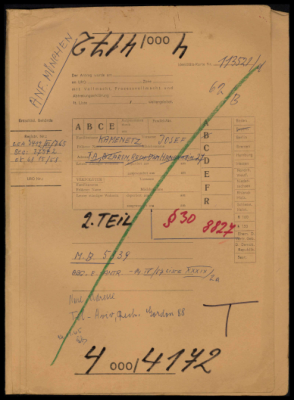 Kamenetz, Josef, residing in Tel Aviv, Israel, reparations fileJosef Kamenetz, residing in Tel Aviv, Israel, filed a claim for compensation for harm to health and profession due to Nazi persecution. Born in Memel, he grew up in Lithuania and attended a Hebrew gymnasium. Before the war, he worked in his father's sawmill and later co-owned it with his brother, Zelig. Following the Soviet occupation in 1939, he worked as an employee. From 1941 to 1944, Josef was imprisoned in the Schaulen (Šiauliai) ghetto, where his three-year-old child was taken from him and never seen again. During his imprisonment, he was held in a prison for six weeks, subjected to beatings which resulted in a broken nose, and forced into heavy labor at the Schaulen airfield and digging peat. He and his wife, Rywka Riwa, managed to escape during the ghetto's liquidation in 1944 and hid in an underground bunker in a forest until their liberation by the Soviets. His parents and four of his five siblings, including his brother Selig, were murdered during the Holocaust. After the war, he lived in Munich for four years, where he was hospitalized for six months due to a heart condition, and immigrated to Israel in 1950. As a result of the persecution, he suffered from severe health issues, for which he was awarded a pension and compensation for a 35% reduction in earning capacity. Based on a court settlement from February 11, 1965, Mr. Kamenetz was awarded a capital payment of DM 11,953 and a monthly pension starting from November 1, 1953, which was periodically increased. The United Restitution Organization (URO) offices in Tel Aviv (also known as MILTAM) and Munich handled the claim, which was also addressed to the Compensation Treuhand, GmbH.
 -
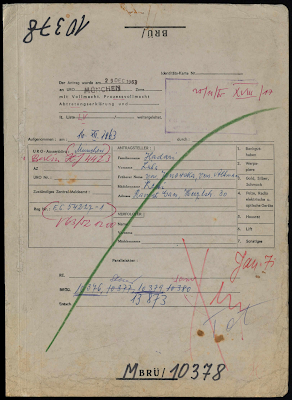 Hadari (née Lewi), Luba, residing in Ramat Gan, Israel, reparations file.Luba Hadari, residing in Ramat Gan, Israel, seeks restitution for precious metal items and jewelry seized in Belchatow, Poland, during the Nazi era, which belonged to her late second husband, Szaja Altman. The file also mentions that Szaja Altman's first wife, Nacha Altman, and three of their children, Aidla (Adela), Idel, and Josel, perished during the Holocaust.
 -
 Grimberg, David, residing in Bne Brak, Israel, reparations file.David Grimberg, a resident of Bnei Brak, Israel, sought compensation for harm to liberty suffered during the Holocaust. Before June 1941, he and his parents, Ancel and Malca Grimberg, were forcibly evacuated from Caiuți to Focșani, Romania. In Focșani, they were all forced to wear the Yellow Badge from August 1941 until their liberation in August 1944. David Grimberg survived the war, lived in Focșani, and emigrated to Israel on January 3, 1962. He was granted a one-time aid payment of 1,000 DM under Article V of the BEG Final Act. The case was handled by the URO offices in Cologne and Tel Aviv.
 -
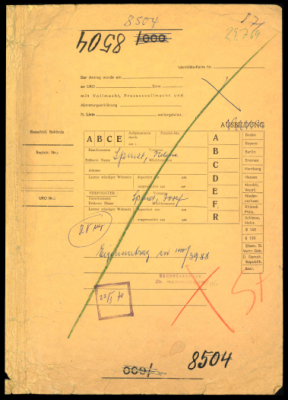 Spinat, Josef and Spinat (née Spira), Helene residing in Tel Aviv, Israel, reparations file.Josef Spinat, a resident of Tel Aviv, Israel, initially sought compensation for harm to profession and harm to belongings from the Nazi era, specifically the plundering and destruction of his shoe store in Marburg in April 1935. Following this event, he fled with his family to Wiesbaden and emigrated to Palestine in late 1935. Before the Nazi era, he had worked in his parents' laundry shipping business in Frankfurt am Main and later ran his own shoe store. In Palestine, he and his wife Helene operated a laundry and cleaning service collection point. After Josef's death on July 20, 1953, his widow Helene and daughter Rita Jaskirowitz continued the claims as his heirs, also seeking compensation for the forced sale of their household items and for harm to his health. The heirs were awarded DM 11,954.70 for damage to property based on § 18 BEG and a total of DM 27,372 for harm to profession. Helene Spinat, born in Pforzheim, also filed her own claims for compensation for harm to her profession, as she had worked in her husband's store and operated her own shoe business in Fulda, for harm to her health, and for harm to her belongings (forced sale of merchandise). Following the plunder of the Marburg store, she suffered a nervous breakdown and was treated in Wiesbaden and Munich before emigrating. As her husband's heir, she was granted a widow's pension under § 86 BEG, which was offset against a previously paid capital compensation, and was also awarded DM 150 for emigration costs under § 57 BEG. The United Restitution Organization (URO) offices in Tel Aviv, Haifa, and Frankfurt am Main, as well as the Irgun Olej Merkas Europa, were involved in the case. Helene's sister, Irene Gittler, perished during the Nazi era.
 -
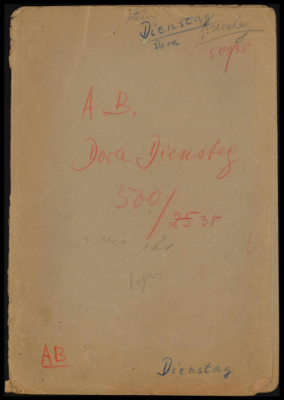 Dienstag, Dora, residing in Tel Aviv, Israel, reparations file.Dora Dienstag, born in Berlin on November 6, 1904, sought compensation for harm to her profession after being dismissed from her stenographer position at the Arbeitsamt Berlin-Mitte in 1933 due to her Jewish heritage. After her dismissal, she worked as a secretary for the Reichsvertretung der Juden in Deutschland until emigrating to Palestine on March 9, 1939. The file also notes she was separated from her sister for ten years as a result of the Nazi regime. Post-war, she resided in Tel Aviv, Israel, and worked for Imperial Chemical Industries Ltd. According to a 1956 decision under the BWGÖD, she was granted the right to reinstatement and transitional payments from January 1, 1954, but these were stopped in 1958 because she declined to return to Germany for health reasons. This led to a dispute with the Oberfinanzdirektion Düsseldorf, which demanded a repayment of 409.06 DM for alleged overpayment. The case was handled by the United Restitution Organization (URO) offices in Tel Aviv, Cologne, and Berlin, with the Jewish Agency for Palestine in Munich initially forwarding her application.
 -
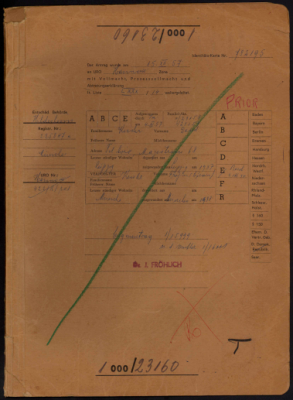 Kessler, David, residing in Tel Aviv, Israel, reparations file.David Kessler, residing in Tel Aviv, Israel, sought compensation for harm to profession and belongings of his brother, Efraim Kessler, who went missing after fleeing Munich for Poland in 1933. After David Kessler's death, his heirs, represented by Riwka Kessler, continued the claim, which was handled by URO offices in Tel Aviv, Munich, and Hannover. The applicant's brother Naftali Kessler and his wife Esther (née Henig) were deported from Berlin to Poland in 1938 and went missing, as did their daughter Elli, while their other daughter Frieda went missing in Leipzig. Another brother, Israel Kessler, was arrested in 1939, imprisoned in Sachsenhausen concentration camp, and went missing; his wife Jutta Frieda (née Sonnenblick) and their two children, Bezalel and Mosche, perished during the Holocaust. The applicant's brother Abraham Kessler and his wife Sima Jocheweth (née Berggrün) were deported from Leipzig to the East and went missing. David's mother, Bluma Kessler (née Krug), was deported from Leipzig to the East in October 1938 and went missing in Krakow. The applicant's niece, Sara Stern (née Kessler), was deported from Leipzig in October 1938 as part of the 'Polenaktion'. The applicant himself emigrated from Leipzig in 1937 via Italy to Palestine, arriving in 1939. On September 12, 1962, the Bavarian State Compensation Office rejected all claims, referencing § 9 Abs. 5 DVO-BEG due to the applicant's failure to cooperate.
 -
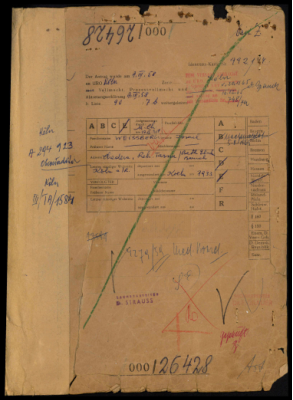 Weissberg (Heinchog), Israel, residing in Chedera, Israel, reparations file.Israel Weissberg, a resident of Hadera, Israel, sought compensation for harm to profession and property, specifically emigration costs, from the Nazi era. Before the persecution, he worked in his father's textile business in Cologne and emigrated to Palestine in April 1933. In Palestine, he worked various jobs, including in a kibbutz, a tile factory, and as a warehouse manager for the British military administration, before opening a small kiosk in 1949. Later, he also sought compensation for harm to health. His father, Isaak Weissberg, perished in the Bergen-Belsen concentration camp on February 17, 1945, and his sister, Lotte Gabel (née Weissberg), perished in the Warsaw Ghetto, along with her husband Leo Gabel. Following Israel Weissberg's death on January 27, 1969, his widow, Margalith Weissberg, continued the applications, seeking a widow's pension and compensation for her husband's health issues. The case was handled by the URO offices in Tel Aviv, Cologne, and Jerusalem, with involvement from the Government Medical Board for Indemnification Claims from Germany and the Irgun Olej Merkaz Europa, which issued a destitution certificate. Contains mention of books.
 -
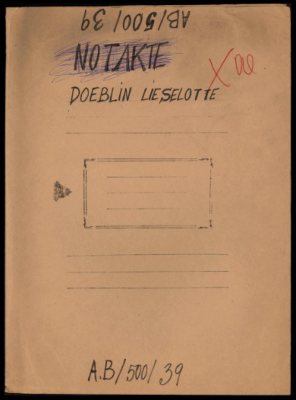 Doeblin, Liselotte, residing in Giwat Brenner, Israel, reparations file.Liselotte Doeblin, born in Berlin-Charlottenburg on September 23, 1908, seeks compensation for harm to profession. After completing her library studies in 1928 and working in Dessau, she was dismissed from her position as a library assistant at the Municipal Library in Berlin on September 30, 1933, based on § 3 of the Law for the Restoration of the Professional Civil Service. She emigrated to Palestine in December 1935, joined Kibbutz Giwat Brenner, had her German citizenship revoked on November 27, 1941, and acquired Israeli citizenship on May 15, 1948. In 1955, she was granted pension benefits based on the BWGÖD (Ausl.), with payments later backdated to April 1, 1951. A subsequent amendment in 1960 reclassified her employment, resulting in a back payment of DM 7,380.18 and an increased monthly pension, which was adjusted several times over the years, reaching DM 872.50 by July 1970. The United Restitution Organization (URO) offices in Tel Aviv and Berlin handled the case, with the Jewish Agency for Palestine in Munich initially forwarding her application. The file mentions other victims who filed for restitution, including Bernhard Neumann (AZ. 14254/54), Kurt Hellmut Kalisch (AZ. 14088/54) and Franz Fink.
 -
 Neuwirth (née Israel), Malka, residing in Safed, Israel, reparations file.Malka Neuwirth, residing in Nathanya, Israel, sought compensation for harm to health, liberty, profession, and property, as well as for wearing the Yellow badge. Before the war, she lived with her parents in Dedes, Hungary, and worked in their grocery store. In May 1944, she was forced into the Sajószentpéter ghetto, deported to Auschwitz concentration camp in June 1944, and then to Allendorf concentration camp in August 1944, where she was liberated in April 1945. After liberation, she was treated in hospitals in Germany, lived in the Pocking DP camp from spring 1946 to March 1947, and stayed in Passau until her emigration to Israel in December 1948. Her brother survived the war, but her sister, Margit Israel, did not survive the persecution, only her husband survived. Her sisters husband would later marry the applicant and immigrate with her to Israel. By a decision on February 11, 1958, the applicant was granted compensation of DM 1,650 for 11 months of imprisonment, with a final payment of DM 150 after deductions. A court decision on August 16, 1962, awarded her an additional capital compensation of DM 165 and a healing process for health issues resulting from persecution. The case was handled by the United Restitution Organization (URO) offices in Munich, Tel Aviv, and Haifa, with the Irgun Olej Merkaz Europa providing a certificate of neediness.
 -
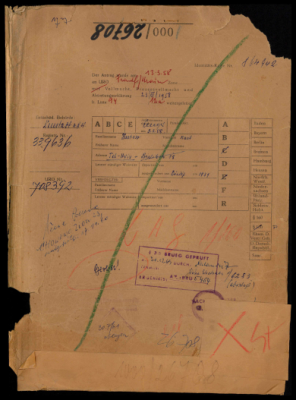 Rubin, Karl, residing in Tel Aviv, Israel, reparations file.Karl Rubin, residing in Tel Aviv, Israel, sought compensation for harm to liberty, having been forced to wear the Star of David in Warsaw from December 1, 1939, until early April 1940, and for harm to his profession, after being forced to abandon his insulation business, "Polbitum," upon fleeing Katowice on September 1, 1939. Born in Stanisławów, Rubin attended German schools, served in the Austro-Hungarian army during WWI, and was a POW in Italy until 1923. He later moved to Katowice and established his business in 1934. After fleeing Warsaw, he and his wife escaped through Italy and Greece, reaching Palestine in April 1942 as part of the Aliyah Bet (illegal immigration). After the war, he became a civil servant in Israel. He was awarded DM 600 for harm to liberty and a monthly pension of DM 200 for harm to profession, both based on decisions from October 12, 1960. The case was handled by the United Restitution Organization (URO) offices in Tel Aviv, Frankfurt, and Berlin.
 -
 Lipszyc (née Teich), Golda, residing in Kiryat Bialistok, Israel, reparations file.Golda Lipszyc (née Teich) from Kiryat Bialistok, Israel, sought compensation for damages to property and professional advancement on behalf of herself and her sister, Tauba Gothelf (née Teich), as heirs of their uncle, Schmuel Teich. Schmuel Teich, a Polish citizen and tailor residing in Dortmund, Germany, was expelled to Zbonszyn, Poland, in October 1938 as part of the 'Polenaktion' and is presumed to have perished on May 8, 1945. His wife, Scheindel, and son, Gerhard, shared his fate. The applicant's father, Srul (Israel) Victor Teich, and mother, Elka Teich (née Briefman), perished in December 1939 while being expelled from Puławy to Bełżyce. Her brother, Nechemia Teich, was deported from the Bełżyce ghetto around May 1942 and perished in Majdanek. Her other brother, Gerschon Teich, was also deported from the Bełżyce ghetto and is presumed to have perished on May 8, 1945. Her sister, Feige Steinberg (née Teich), her husband Asriel, and their child Sara, were deported from the Bełżyce ghetto in the fall of 1942 and are presumed to have perished. The applicant's uncle, Mosche Teich, his wife Dwora, and their daughter Sara were also deported from the Bełżyce ghetto in the fall of 1942 and are presumed to have perished. The applicant, Golda Lipszyc, and her sister Tauba Gothelf were in the Bełżyce ghetto until September 1942, then imprisoned in Majdanek, Bliżyn, and Auschwitz concentration camps, and were liberated in Kratzau on May 9, 1945. Golda later immigrated to Israel in 1948. The community of heirs received a capital compensation of DM 3,869 for professional damages and a settlement of DM 5,000 for property damage under the German Federal Compensation Law (BEG). The United Restitution Organization (URO) offices in Tel Aviv, Cologne, and Haifa, along with the Jewish Community of Greater Dortmund, were involved in the case.
 -
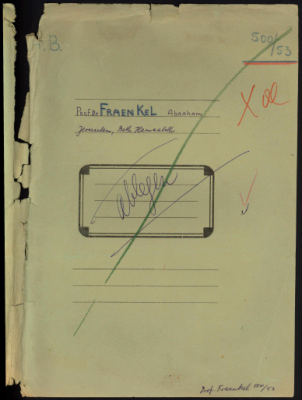 Fraenkel, Abraham Adolf, residing in Jerusalem, Israel, reparations file.A resident of Jerusalem, Israel, sought compensation for harm to profession after being dismissed in 1933 from his position as a full professor of mathematics at the University of Kiel, a role he had held since 1928. He emigrated from Germany, acquiring Mandate Palestine citizenship in 1937 and subsequently becoming a professor at the Hebrew University in Jerusalem. A decision by the Minister of the Interior of Schleswig-Holstein on July 15, 1953, granted him restitution, recognizing the period from September 9, 1933, to March 31, 1951, as pensionable service time and awarding him emeritus benefits as if he had retired on April 1, 1951. For the period from April 1, 1950, to March 31, 1951, he received a one-time compensation equal to one year's pension benefits. The case involved disputes over the deduction of his Israeli income from his German pension based on Schleswig-Holstein state laws, and by November 1955, he had received a back payment of 20,036.90 DM. The claim was supported by the Jewish Agency for Palestine in Munich and Cologne, various URO offices including Tel Aviv, Hannover, Munich, Cologne, and London, and the Jewish Restitution Successor Organization in Bad Godesberg. The file also mentions a victim named Obstfeld, who is unrelated to the applicant. She lost her parents and brother due to Nazi persecution, and it is stated that she had a particularly severe persecution.
 -
 Tuchman (née Kleiman), Jona, residing in Jaffa, Tel Aviv-Yafo, Israel, reparations file.Jona Tuchman, born in Ludwipol, Poland in 1920, sought compensation for harm to liberty and health. Her persecution included being forced to wear the Yellow Badge and imprisonment in the Ludwipol Ghetto from July 1941 to September 1942, where she was beaten by an SS man during forced labor, resulting in severe hearing problems. She then lived in hiding in nearby forests until her liberation in the summer of 1944. After the war, she was in the Neu-Freimann DP camp from 1946 until emigrating to Israel in 1949, later residing in Jaffa and Ramat Gan. A 1956 settlement for harm to liberty was later increased to DM 4,350 for 29 months of persecution. For her health issues, she was awarded a capital payment of DM 10,780, a pension back-payment of DM 8,850, and an ongoing monthly pension. However, on September 11, 1969, a revocation notice was issued under § 7 BEG, nullifying all awards and demanding the repayment of DM 51,920, alleging the use of false witnesses, which led to a prolonged legal battle. The file also contains information about Chawa Ajzenstein who was interned alongside the applicant. Her first husband, Israel Ajzenstein, was beaten by an SS man in the Ludwipol Ghetto in August 1942 and was shot and killed a week later. The applicants parents, Jehoschua and Rachel Kleiman, survived and lived with her in Jaffa after the war; her father died in 1956. Her case was handled by the URO/MILTAM offices in Tel Aviv and Munich, the Government Medical Board in Tel Aviv, and later by the Offizialanwalt für Wiedergutmachung in Munich.
 -
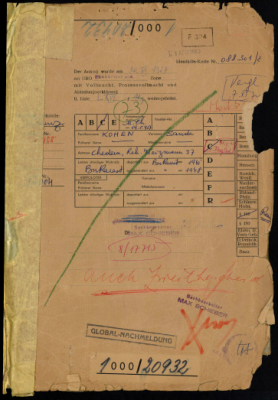 Kohen, Sandu, residing in Hadera, Israel, reparations file. Kohen (née Vaduva), Valerica, residing in Hadera, Israel, reparations file.Sandu Kohen, residing in Hadera, Israel, sought compensation for harm to liberty suffered in forced labor camps in Romania, including Busteni, Telega, Campina, Valea Prahovei, and Bucharest, from August 1941 to August 1944, where he claimed to have been forced to wear a yellow armband. He also stated he was deported from Bucharest in 1941. After the war, he emigrated from Romania to Israel in 1948. On May 31, 1963, Sandu Kohen was granted compensation of DM 1,500 for harm to liberty suffered from August 16, 1941, to September 30, 1942, while his claim for the period from October 1, 1942, to August 23, 1944, was initially denied. Later, he and his wife, Valerica Kohen, applied for a monthly allowance from the Hardship Fund (Härteausgleich). In a settlement dated October 3, 1974, they were granted a hardship allowance under § 165 BEG, which included a one-time payment of DM 4,900 and a monthly allowance of DM 235 from November 1, 1974, to October 31, 1978. This monthly allowance was later increased to DM 300 and extended until October 31, 1982, but a subsequent request for further extension was denied in 1983, and the appeal against this decision was dismissed in 1984. The United Restitution Organization (URO) offices in Tel Aviv and Frankfurt handled the case.
 -
 Strang, Arjeh, residing in Rishon LeZion, Israel, reparations file.Arjeh Strang sought compensation for harm to his education, which was interrupted in Breslau in 1933 after his parents, Schmuel (Siegmund) and Gertrude Strang, were expelled from the city due to Nazi persecution. He emigrated with his family to Saarbrücken in May 1933 and then to Palestine in April 1934, where he learned the trade of a locksmith. After the war, he resided in Israel, initially in Rishon LeZion and later in Givatayim. He was granted a total of DM 10,000 in compensation for damages to his education through decisions in 1961 and 1965, pursuant to § 118 Abs. 1 BEG and § 116 BEG respectively. The United Restitution Organization (URO) offices in Tel Aviv, Frankfurt am Main, and Jerusalem were involved in handling the case.
 -
 Peretz (née Abramovici), Sofia, residing in Ramat Gan, Israel, reparations file.Sofia Peretz, born in Dorohoi, Romania, in 1922 and later residing in Ramat Gan, Israel, sought compensation for harm to liberty suffered. She was forced to wear the Yellow Badge in Iași from August 1941 until her liberation in August 1944 and also experienced restrictions on her freedom, including curfews. Her parents were subjected to the same measures. After the war, she immigrated to Israel in June 1962. Based on a decision from November 3, 1966, under Article V of the BEG (Federal Compensation Law), she was awarded 1,000 DM, receiving a final payment of 925 DM after URO fees. The case was handled by the United Restitution Organisation offices in Tel Aviv and Cologne.
 -
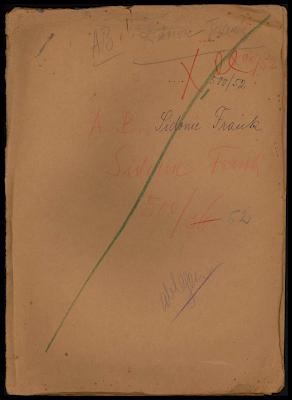 Frank (née Katz), Sidonie, residing in Bne Brak, Israel, reparations file.Sidonie Frank, née Katz, residing in Bnei Brak, Israel, seeks compensation for harm to profession due to her dismissal from her position as a school administrator in Giessen on April 11, 1933, by the Hessian Ministry of Culture and Education, based on the Law for the Restoration of the Professional Civil Service. Before her dismissal, she worked as a teacher in Frankfurt am Main, Cologne, Halberstadt, and Lich. She emigrated to Yugoslavia in 1933 and then to Palestine in September 1938, where she resumed working as a teacher in Bnei Brak from 1939. According to a decision from January 12, 1954, based on the German law for Wiedergutmachung for public service employees (BWGoeD), she was granted pension benefits effective from April 1, 1951, as if she had been promoted to teacher and remained in service until March 31, 1951, and she was also granted compensation for the period from April 1, 1950, to March 31, 1951. The United Restitution Organisation in Tel Aviv handled her case, which was also noted by the Jewish Agency for Palestine Head Office in Munich and the IRGUN OLEJ MERKAS EUROPA.
 -
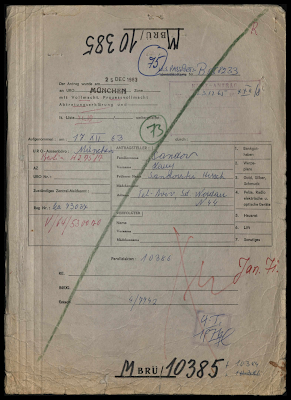 Sandow (Sandowski), Harry, residing in Tel Aviv, Israel, reparations file.Harry Sandow, a resident of Tel Aviv, Israel, sought restitution for precious metal items and jewelry seized in 1941 in Marijampolė, Lithuania, from his mother, Riwa Sandowski née Lurie, who perished there the same year. Harry's sisters, Bracha Lea, Mirjam, and Rina, also perished during the persecution along with their families. The case was handled by the United Restitution Organization (URO) offices in Tel Aviv, Berlin, and Munich. Following Harry Sandow's death in the USA around 1975, the URO informed his wife, Malka Sandow, that the claim could not be pursued further as the victim was his mother and there were no other eligible heirs.